
NAD+ IV therapy is one of the most hyped treatments in longevity clinics today — but does it actually work? IV NAD therapy delivers nicotinamide adenine dinucleotide, a coenzyme central to energy and DNA repair, straight into your bloodstream. The pitch is more energy, sharper focus and slower aging. This guide separates what the science supports from what is still marketing, covers benefits, side effects and cost, and helps you compare verified clinics offering it.
Key takeaways
- NAD+ is a real, essential molecule, and its levels do fall with age — the biology is well-established.
- The case for intravenous NAD+ in healthy people is still early; most human data come from oral precursors, not IV drips.
- Reported benefits are largely anecdotal; controlled trials of IV NAD+ for energy or anti-aging are scarce.
- Side effects are usually mild — flushing, nausea, chest tightness — and worse with fast infusions.
- A single NAD+ IV typically costs USD 250–1,000; clinics rarely accept insurance for elective infusions.
What is NAD+ IV therapy?
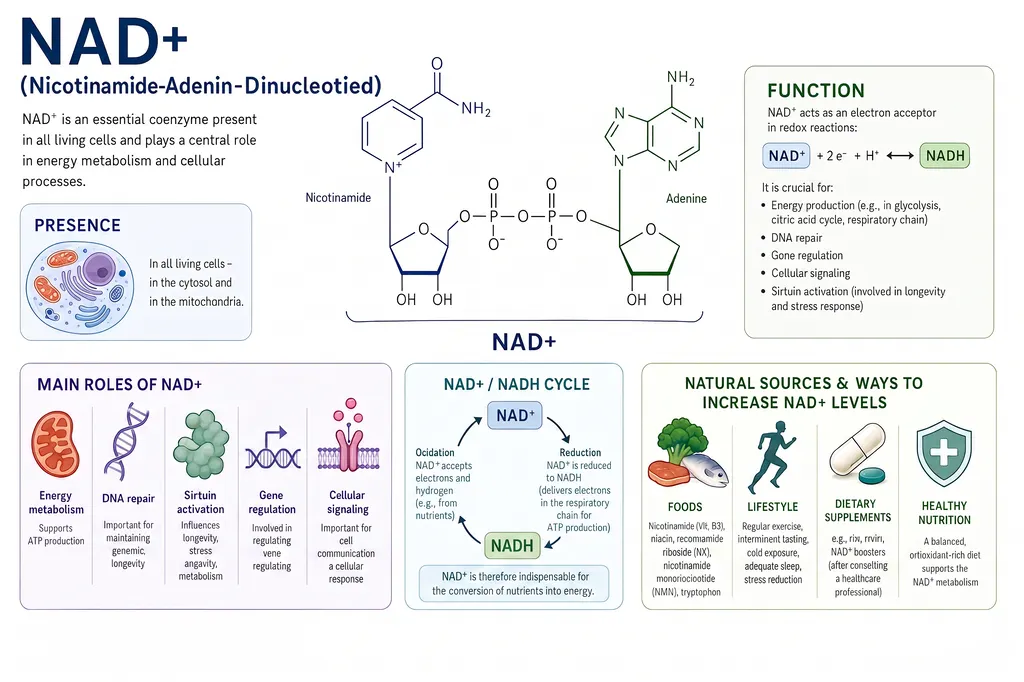
NAD+ IV therapy is an intravenous infusion of nicotinamide adenine dinucleotide (NAD+), a coenzyme your cells use to produce energy and repair DNA. Delivered by drip, it aims to raise NAD+ levels faster than supplements taken by mouth.
NAD+ sits at the centre of cellular metabolism. It shuttles electrons during energy production and fuels repair enzymes such as sirtuins and PARPs, and its levels fall as we age (Błaszczyk et al., Int J Mol Sci 2026). Clinics offer it as a standalone drip or bundled into broader metabolic and recovery programmes.
How does NAD+ IV therapy work?
The theory is simple: NAD+ levels decline with age, so replacing it intravenously should restore cellular function. An IV route bypasses digestion, aiming to make more of the molecule available to tissues.
NAD+ powers hundreds of reactions, from converting food into ATP to fuelling the enzymes that repair DNA. NAD+ supplementation has shown early promise in rare disorders driven by DNA damage and premature aging (Bohr et al., Aging Cell 2026). The open question is whether flooding the bloodstream with NAD+ meaningfully raises it inside cells. A recent PRISMA-guided systematic review found encouraging preclinical data but still limited clinical evidence for NAD+ supplementation in healthy people (Gallagher et al., Ageing Res Rev 2026).
What are the benefits of NAD+ IV therapy?
Honestly, the proven benefits in humans are limited. NAD+ is essential biology, and restoring it is a reasonable scientific target — but robust clinical trials of IV NAD+ for energy, focus or longevity in healthy adults are still scarce.
It helps to separate established from preliminary evidence:
- Established: NAD+ is vital for metabolism and DNA repair; its levels and metabolites are measurable in people and shift under disease and surgical stress (Fujita et al., Sci Rep 2024).
- Preliminary: in animal studies, the NAD+ precursor NMN reduced brain injury after cardiac arrest (Kaito et al., PLoS One 2025) — but animal results often fail to translate to humans.
- Anecdotal: claims of more energy, mental clarity and faster recovery rest mostly on patient reports, not controlled IV trials.
A trustworthy clinic will tell you the same: the molecule matters, but the IV evidence is early.
Risks and side effects
NAD+ IV therapy is generally well tolerated, but it is not risk-free. The most common side effects are infusion-related: flushing, nausea, chest or abdominal tightness, light-headedness and cramping — usually worse when the drip runs quickly.
These reactions typically ease when the infusion rate is slowed, which is why sessions can last one to several hours. As with any IV, there is a small risk of bruising, irritation or infection at the injection site. Long-term safety data for repeated NAD+ infusions in healthy people are limited. NAD+ IV therapy is not a treatment for any disease, and it should never replace care for a diagnosed condition. Anyone pregnant, breastfeeding, or managing a chronic illness should seek medical advice first.
How much does NAD+ IV therapy cost?
A single NAD+ IV session typically costs between USD 250 and USD 1,000, depending on the dose, the clinic and the country. Higher-dose or multi-session packages run higher, and premium longevity resorts sit at the top of the range.
As a rough guide based on publicly advertised pricing:
- Single low-dose drip: roughly USD 250–500.
- Higher-dose or longer infusion: about USD 500–1,000 per session.
- Multi-session packages: often USD 1,500–4,000 for a course of several drips.
Because it is elective, NAD+ IV therapy is almost never covered by insurance. Prices at residential clinics usually fold the infusion into a wider programme, so confirm exactly what a quote includes. You can compare verified providers under Metabolic Health in our directory.
Who is NAD+ IV therapy for (and who should avoid it)?
NAD+ IV therapy is marketed mainly at healthy adults seeking more energy, recovery support or a longevity edge. It is elective and optimisation-focused, not a medical treatment — so it suits people who understand the evidence is early and want to experiment under supervision.
Some people should be cautious or avoid it altogether. Pregnant or breastfeeding women, anyone with a serious heart, liver or kidney condition, and people on multiple medications should not start without a doctor's review. Because reactions track with infusion speed, medical oversight matters. If you are considering NAD+ IV therapy as part of a wider plan, a longevity clinic can assess whether it fits your goals — see our pillar guide, what a longevity clinic does, for context. Always consult a qualified clinician first.
Frequently asked questions
Does NAD IV actually work?
Is NAD similar to Ozempic?
What NAD does Jennifer Aniston take?
What is the downside of NAD?
Sources & references
- Błaszczyk, J. W., et al. (2026). Degradation of the Molecular Basis of Life During the Aging Process. Int J Mol Sci. doi:10.3390/ijms27052419
- Bohr, V. A., et al. (2026). Promising Results With NAD Supplementation in Rare Diseases With Premature Aging and DNA Damage. Aging Cell. doi:10.1111/acel.70319
- Gallagher, C., et al. (2026). NAD+ supplementation for anti-aging and wellness: A PRISMA-guided systematic review of preclinical and clinical evidence. Ageing Res Rev. doi:10.1016/j.arr.2026.103057
- Fujita, H., et al. (2024). Novel insight into nicotinamide adenine dinucleotide and related metabolites in cancer patients undergoing surgery. Sci Rep. doi:10.1038/s41598-024-66004-1
- Kaito, D., et al. (2025). Systemic nicotinamide mononucleotide administration to mitigate post-cardiac arrest brain injury in mice. PLoS One. doi:10.1371/journal.pone.0334608

Co-founder of Lifespan Solutions and CEO of Centenara Labs, a Swiss biotechnology company developing therapies that target the hallmarks of aging. A life-science executive and venture investor with 15+ years in biotech — across AstraZeneca, Sanofi and Epidarex Capital — she holds a PhD in biochemistry from the University of Göttingen.
View profile

